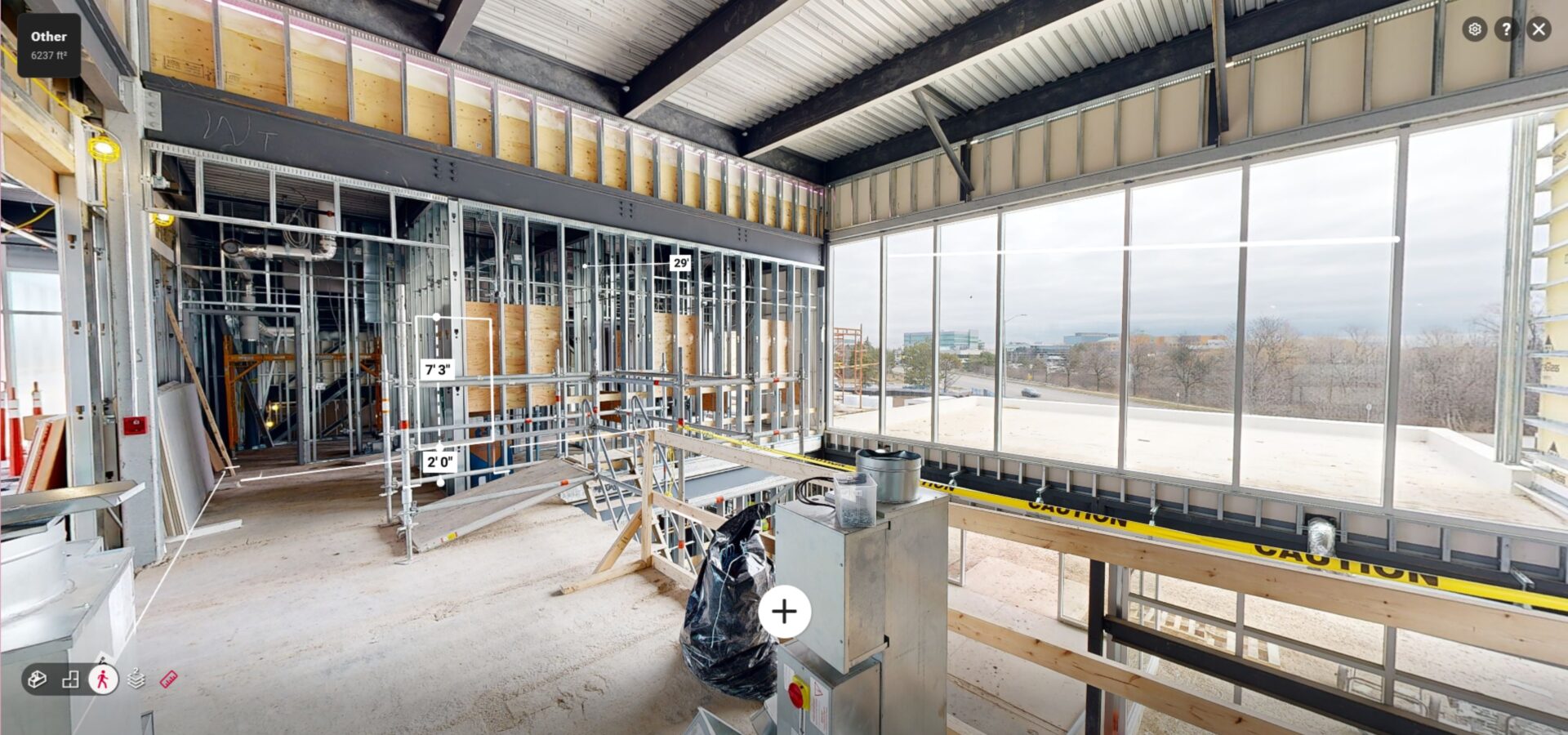
Projects are only as successful as the information they’re built on. When existing conditions are incomplete, outdated, or inaccurate, project teams are forced to make decisions with uncertainty, often leading to coordination challenges, redesigns, schedule impacts, operational disruption, and costly rework.
As owners increasingly choose to renovate existing facilities rather than build new, understanding existing conditions has become one of the most important investments a project team can make.
Creating a Reliable Foundation
LiDAR (Light Detection and Ranging) scanning establishes a reliable digital foundation of what already exists before design begins.
Using millions of laser measurements, LiDAR captures a highly detailed digital representation of a building in a fraction of the time required for traditional field measurement. The resulting point cloud becomes a permanent digital record that can be measured, reviewed, and shared throughout the life of a project.
Rather than relying on assumptions or incomplete documentation, architects and engineers can work from precise existing-condition data with confidence.
Better Information. Better Decisions.
The value of LiDAR isn’t simply accuracy, it’s certainty.
When project teams understand existing conditions from the outset, they can identify coordination issues before construction, validate structural and building systems, and make informed design decisions earlier in the process.
The result is better coordination across disciplines, fewer surprises in the field, and a more predictable path from design to construction.
For owners, that means:
- Reduced redesign and rework
- Greater schedule and budget certainty
- Faster decision-making
- Improved collaboration across project teams
- Fewer site visits and safer data collection
- Less operational disruption
On complex projects, including hospitals, industrial facilities, schools, and occupied commercial buildings, these advantages can have a significant impact on both project outcomes and long-term operational continuity.
More Than Documentation
LiDAR scanning is also the foundation for today’s digital project delivery.
Point cloud data can be transformed into Building Information Models (BIM), enabling architects, engineers, contractors, and owners to coordinate within a shared digital environment. This improves clash detection, supports construction planning, and creates accurate digital records that continue to deliver value long after construction is complete.
As digital twins and lifecycle asset management become more widely adopted, these datasets are evolving from project documentation into operational tools that support future renovations, maintenance planning, and facility management.
Designing with Confidence
The future of building renewal isn’t about collecting more data; it’s about collecting the right data at the right time.
By investing in accurate existing-condition documentation before design begins, owners can reduce uncertainty, make better-informed decisions, and avoid many of the costly surprises that traditionally accompany renovation projects.
At WalterFedy, we see LiDAR scanning as the foundation for better project outcomes. By combining advanced reality capture with integrated architectural and engineering expertise, we help clients move forward with confidence, knowing their decisions are built on an accurate understanding of the spaces they’re transforming.
Reality capture represents just one way our Digital Practice team is helping clients make more informed decisions through digital innovation. To learn more about our capabilities, connect with our Digital Practice Lead, connect with our Digital Practice Lead Jy Hamilton.