

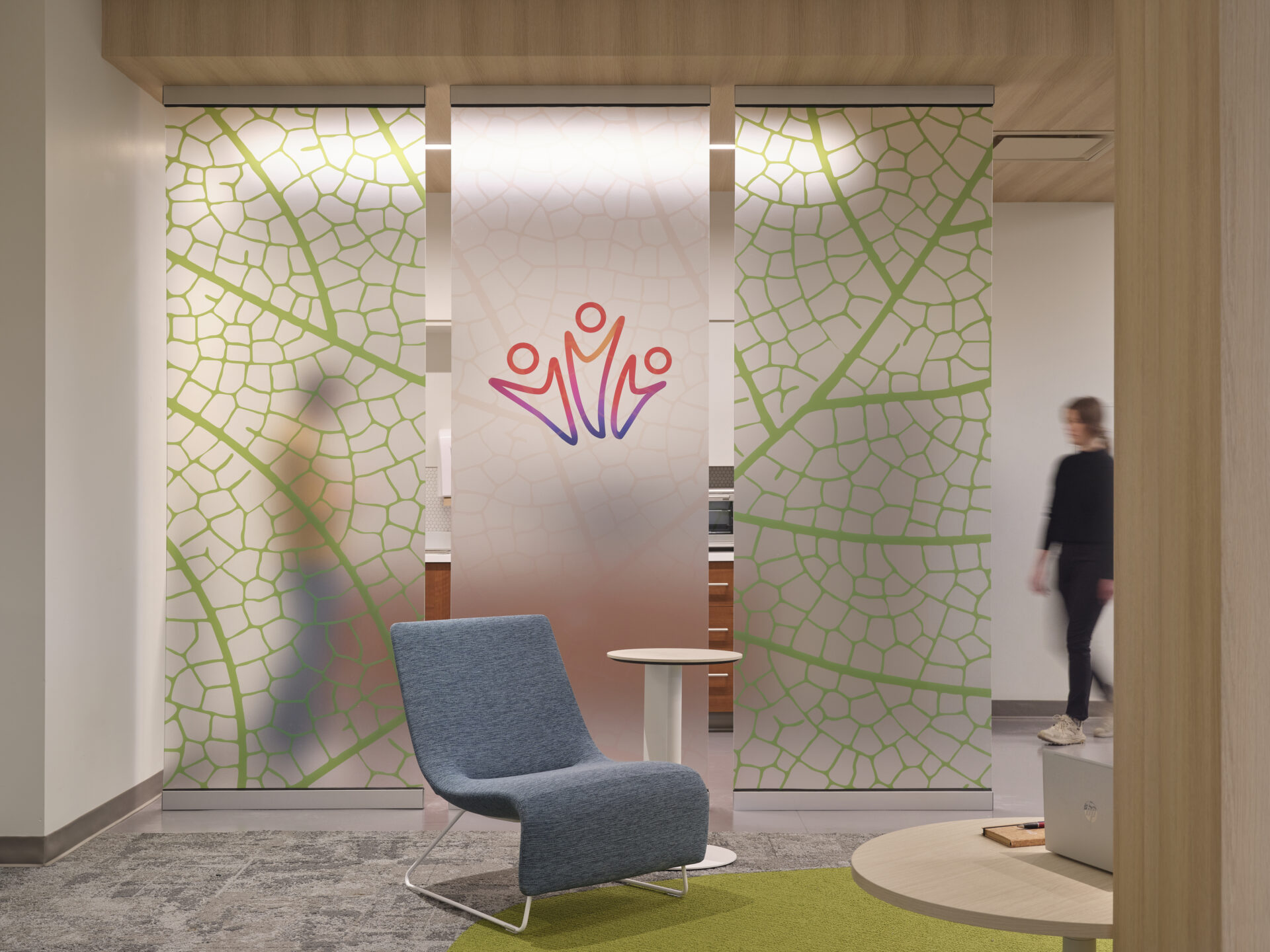
National AccessAbility Week encourages us to consider the role we all play in creating a more accessible Canada. This year’s theme, Building a Strong, Accessible Canada, highlights the importance of working together to remove barriers and create environments where everyone can participate fully.
In the design industry, accessibility extends beyond meeting technical requirements. It means creating spaces that support different ways of working, thinking, communicating, and experiencing the world. This mindset was central to the design of the National Centre for Autism Collaboration (NCAC) at Ron Joyce Children’s Health Centre in Hamilton, Ontario.
As a Canada-wide network of researchers, clinicians, educators, and organizations working to improve outcomes for people with autism, the NCAC required a space that could support collaboration, knowledge sharing, and virtual training. Just as importantly, the environment needed to reflect the purpose behind the work and the people it ultimately serves. Although the project was designed as a workplace, the design team approached it differently than a conventional office. Every individual working within the NCAC contributes to initiatives that support children and families across Canada, and that sense of purpose became an important influence on the overall design. 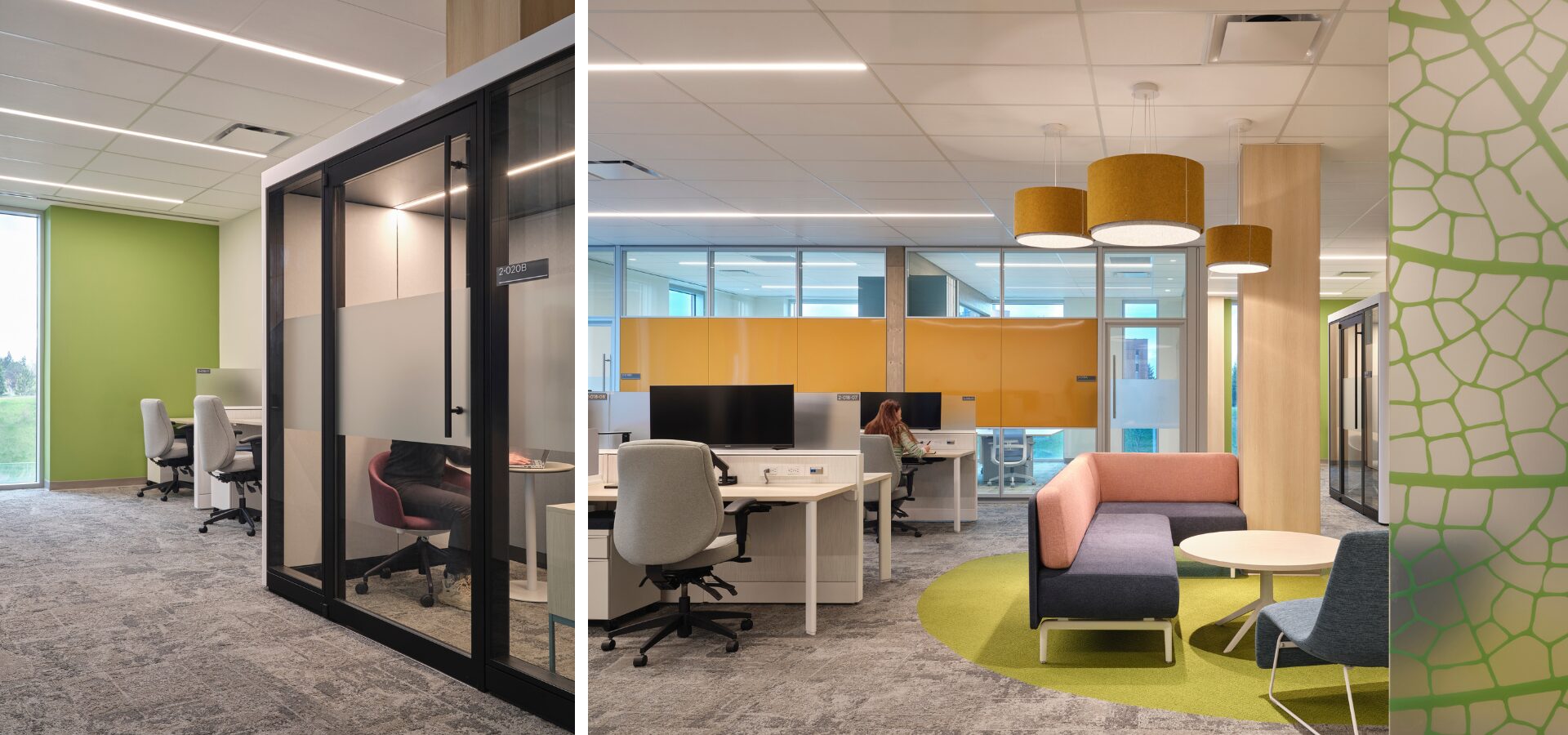 Creating environments that support neurodiverse users requires thoughtful consideration of sensory experience. Decisions around acoustics, lighting, materiality, and spatial planning were carefully integrated to create a workplace that feels welcoming, comfortable, and supportive. A vibrant colour palette brings energy to the space, while warm wood finishes, soft textiles, and acoustic materials help create balance. Together, these elements create an environment that feels uplifting without becoming overstimulating, supporting both wellbeing and focus. The nature of the work also required spaces that could accommodate different working styles. Open areas encourage collaboration, knowledge sharing, and connection, while quieter rooms and acoustically separated meeting spaces support focused work, privacy, and virtual engagement. By providing a variety of work settings, the design empowers users to choose the environment that best supports the task at hand. This principle of choice is increasingly recognized as an important aspect of inclusive design. Inclusive spaces recognize that there is no one-size-fits-all approach. Thoughtful design creates opportunities for people to engage with their environment in ways that feel natural and effective for them.
National AccessAbility Week also provides an opportunity to broaden our understanding of accessibility. While codes and standards provide an essential starting point, meaningful accessibility considers the full human experience: how people feel, interact, focus, connect, and belong within a space.
For Intern Interior Designer, Sarah Fowler, that perspective begins with empathy. 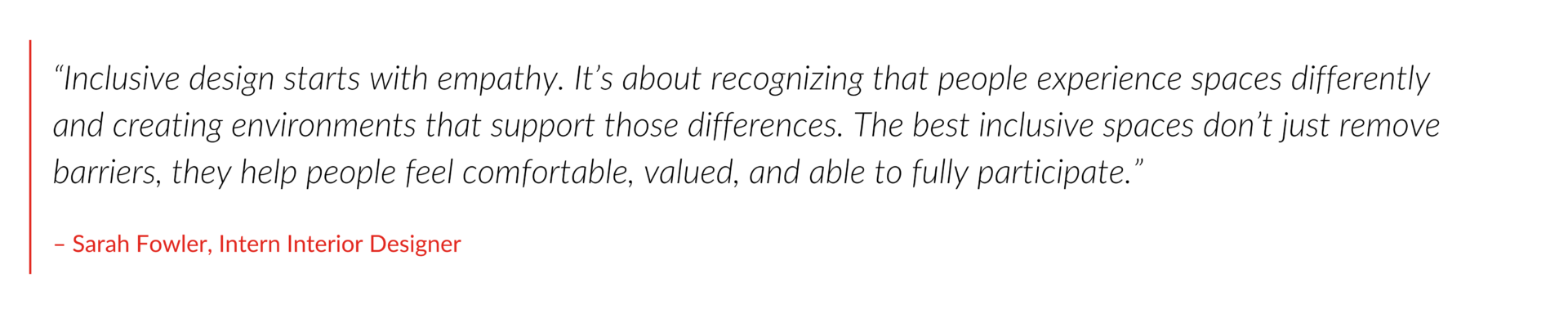 This philosophy extends beyond any single project. Whether designing workplaces, healthcare facilities, educational environments, or community spaces, thoughtful design can help foster participation, connection, and belonging.
 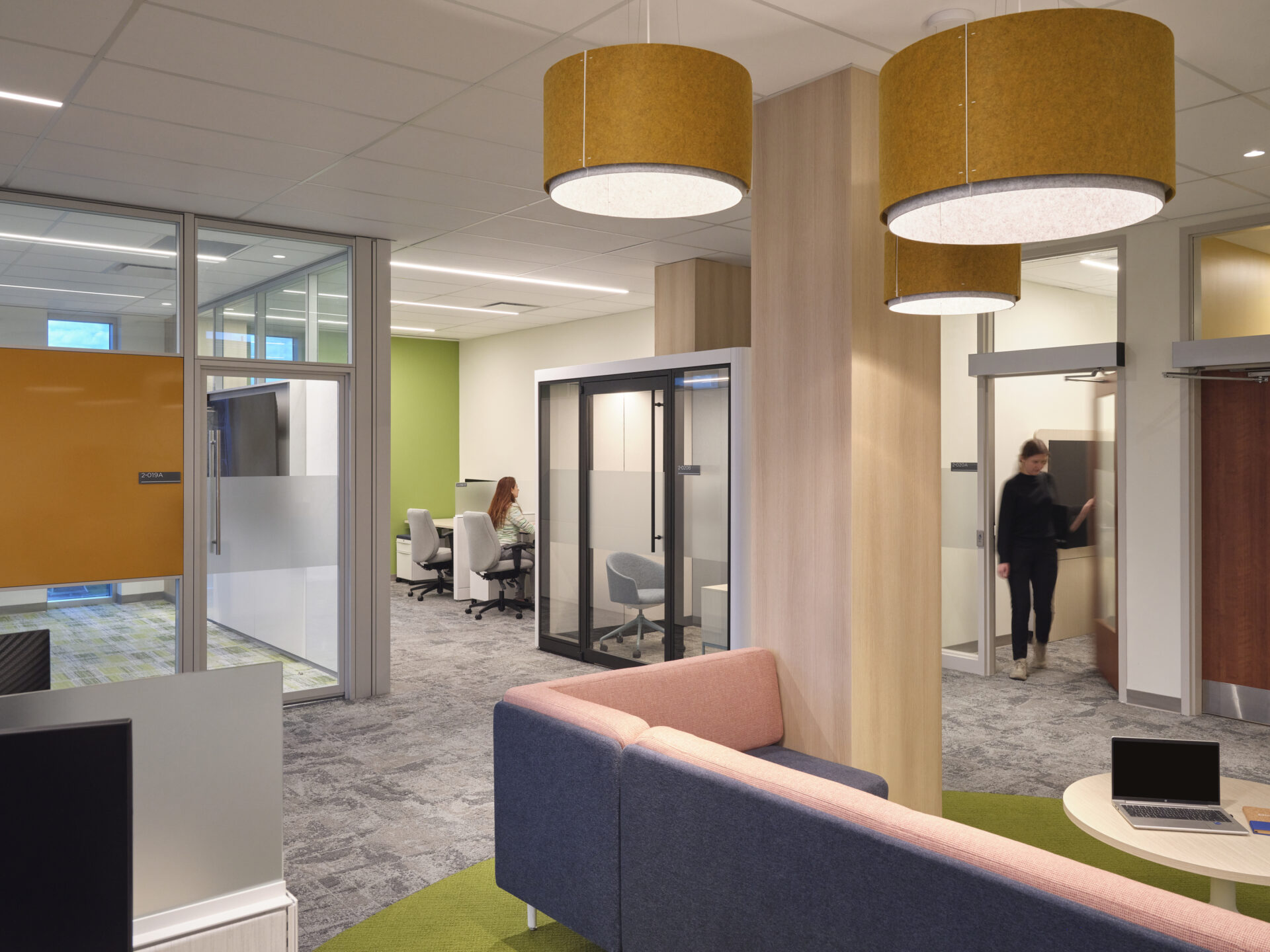 As we recognize National AccessAbility Week, projects like the NCAC remind us that accessibility is not only about removing barriers, it’s about creating environments where people feel welcomed, supported, and empowered to contribute. Building a stronger, more accessible Canada requires ongoing collaboration across sectors and disciplines. By designing with empathy and inclusion in mind, we can create spaces that work better for everyone while strengthening the communities they serve.
Photography: Riley Snelling